
How to Search the St. Joseph Court Docket
As the parish seat, St. Joseph anchors Sixth Judicial District Court records, though it is not one search result for every local case. Start with the caption. A St. Joseph town ordinance or Mayor's Court matter belongs with the town. A Sixth JDC caption belongs with the Tensas Parish Clerk of Court. Ward justice-court notices stay with their own justice. The free eClerks LA Statewide Portal covers statewide civil, family, probate, marriage, and land indexes. It does not serve as a full St. Joseph live docket or hearing-calendar viewer, so treat it as a research aid rather than a calendar.
- Read the St. Joseph notice for its court name, division or ward, case or citation number, and the most recent date.
- For a Sixth JDC case, use the Tensas Parish Clerk and the court’s current Docket Slip or scheduling workflow to confirm the record and setting.
- For a St. Joseph municipal matter, contact Town Hall and ask whether the town holds a public docket entry, date, or copy.
- For a ward-court matter, contact the justice named on the paper rather than treating the courthouse as custodian by default.
- Use a statewide index only for the record categories it covers, then confirm a current St. Joseph court setting with the custodian.
Tensas Parish publishes no single official case-number format. Copy the number from the notice exactly as printed, and resist adding an assumed year, division prefix, or citation code when running a St. Joseph docket search.
St. Joseph Courthouse Record Route
The Tensas Parish Courthouse sits at 201 Hancock Street, Courthouse Square in St. Joseph. That makes it the parish seat. The Tensas Parish Clerk of Court handles Sixth JDC civil, criminal, traffic, minute, filing, recording, and copy work in one office. Call 318-766-3921 during weekday hours of 8:30 a.m. to 4:30 p.m. Mail goes to P.O. Box 78, Saint Joseph, LA 71366. When you ask about a St. Joseph district case, give staff the case type, the approximate year, the caption or number, and what you need. Spell out whether that means inspection, a plain copy, a certified copy, minutes, or a current setting route.
That courthouse is also why St. Joseph cannot be boiled down to a municipal docket page. Sixth JDC serves Tensas through Division A and Division B. Clerk records reach back to 1843, supported by microfilm and digital preservation. Because of that, an older St. Joseph district file may require staff retrieval instead of a same-day online result. The courthouse route and the town record route are simply different doors.
Tensas Parish Clerk of Court
201 Hancock Street, Courthouse Square
Saint Joseph, LA 71366
318-766-3921
Monday through Friday, 8:30 a.m. to 4:30 p.m.
The St. Joseph Municipal Court
St. Joseph Town Hall is its own local-government record source. The official town site lists 125 Plank Road, P.O. Box 217, Saint Joseph, LA 71366, and 318-766-3713. Its calendars, news, payments, agendas, and minutes describe town functions. Town agendas and minutes are not automatically a St. Joseph judicial docket. Town Hall posts no searchable Mayor's Court docket or calendar. So do not assume a municipal schedule, judge, case-number format, or public search field.
Louisiana R.S. 33:441 sets the Mayor's Court framework for municipal ordinance violations and statutory costs. For a St. Joseph municipal matter, ask Town Hall whether it is the issuing court. Ask whether a public record or date can be confirmed, and what citation details it needs. A town record and a Sixth JDC court minute can involve different bodies. Even so, both can carry the St. Joseph name.
St. Joseph Town Records and Dockets
Two addresses in St. Joseph answer two different questions. Town Hall at 125 Plank Road handles town-government materials and possible municipal-court routing. The courthouse at 201 Hancock Street is the clerk-held route for district records. A town agenda may show municipal business. A judicial docket or minute record, by contrast, tracks actual court activity. The split matters most when a notice names a specific body. Watch for "Mayor's Court," "Sixth Judicial District Court," "Tensas Parish Clerk," or a ward number.
| St. Joseph source | What it can identify | What it does not establish |
|---|---|---|
| Town Hall | Town contacts, municipal functions, agendas, minutes, and payment routing | A complete Sixth JDC case history or district hearing calendar |
| Tensas Parish Clerk | District civil, criminal, traffic, minute, filing, and copy routes | Automatic custody of every town or ward-court file |
| eClerks LA statewide portal | Free statewide index searching for specified document sets | A guaranteed live St. Joseph municipal or trial docket |
The town's DOTD map label gives St. Joseph a 2020 Census population of 831. That figure describes a small local setting, not the reach of any particular St. Joseph court paper. Whatever the size, the St. Joseph records follow the court named on the notice.
St. Joseph Court Dates and Settings
Sixth JDC posts no public searchable daily St. Joseph court calendar. Its official FAQ notes that hearings run in person and by Zoom. District settings are requested through a Docket Slip filed with the Clerk. The judge then fixes the time and place. Confirmation paths for a current St. Joseph district hearing include the clerk. Also the Division A Court Administrator, the Division B law clerk, and the Minute Clerk. For a municipal or ward notice, the lower court that issued it must confirm the date. No other office speaks for that setting.
| Case number | Use the exact number printed on the St. Joseph notice; local format is not publicly published |
|---|---|
| Court and division | Identify Town Hall, ward justice court, or Sixth JDC Division A or B before calling |
| Date and time | Confirm with the issuer because no consolidated St. Joseph calendar was located |
| Setting type | A district Docket Slip may request trial, exception, motion, rule, conference, continuation, or dismissal setting |
| Current status | Ask if the matter was continued and refixed, continued without fixing, dismissed as a setting, or remains set |
A Docket Slip filing date in St. Joseph is not itself a hearing date. Confirming directly with the court keeps you from mistaking a setting request for the final calendar entry.
St. Joseph Docket Slip Workflow
Every Sixth JDC setting in St. Joseph starts with paperwork the local court actually uses. The official Docket Slip is that instrument. It can cover a trial on merits, a pending exception, a motion, a rule, an agreed continuation or refixing, a telephone conference, a continuation without fixing, or a dismissed setting. What goes on it? The case caption and number, date, time, division, attorney details, estimated time, notice information, rule reference, and the judge's signature. Treat it as a district-court setting form. It is not a public St. Joseph docket database.
The court's own FAQ explains the mechanics. The clerk presents the file to the judge. The judge then fixes the time and place. To cancel a setting, counsel faxes a letter to chambers and calls the Minute Clerk. One distinction matters when a St. Joseph notice looks stale. A matter continued without fixing has no replacement date yet. A matter continued and refixed, though, should get a new setting.
Note: Confirm any St. Joseph district setting after a continuance, a closure order, or a change in the court's hearing method.
St. Joseph Traffic Tickets
Not every St. Joseph traffic ticket travels the same road. A citation may be municipal, ward-based, or district-held. It can also be tied to the Sixth District Attorney's separate traffic-diversion process. The issuing court governs both record and date. The Tensas Clerk's criminal information sends criminal and traffic fine payments to the Tensas Parish Sheriff. The number is 318-766-3954. That payment line is not a public St. Joseph docket or case-history tool. Town payment and calendar material is not a complete judicial record either.
Read the citation itself first. Pull the court caption, citation number, offense date, and appearance date. Then ask the listed court directly. Ask whether it can confirm a public docket entry, a minute record, a payment balance, or a certified disposition. For the parish-wide picture of split traffic routes, see Tensas Parish traffic court records. A St. Joseph paper still needs the issuing court's answer. Never assume any deadline or date.
St. Joseph Issuing Court Check
Start with the court caption on any St. Joseph traffic or ordinance paper. "Mayor's Court" sends you to Town Hall. A ward or justice label sends you to that justice. A caption reading "Sixth Judicial District Court" sends you to the courthouse. So does a division name or the Tensas Parish Clerk. The same logic governs requests for a current hearing date. A street address alone does not decide this. It does not say who holds the docket.
- Docket
- The chronological record of court activity and settings, distinct from a town agenda or a payment confirmation.
- Court minutes
- The clerk or court record of orders and actions, particularly important when no public calendar is posted.
- Continued without fixing
- A Sixth JDC setting change that leaves no new date in place yet.
- Certified copy
- A copy authenticated by the custodian; its current fee and availability should be confirmed with the Clerk.
Checking the caption first keeps a St. Joseph request from landing with a town office, court coordinator, or clerk that does not hold the St. Joseph file.
Where St. Joseph Court Cases End
St. Joseph is the parish seat, so many district matters physically land at the courthouse. That does not make every town or ward case a Sixth JDC record. Town ordinance matters begin with the municipal route. Justice-court matters stay with their ward court. The Tensas Parish Clerk of Court maintains the district files. That covers civil, criminal, family, succession, adoption, and other Sixth JDC matters. From there, a case can go further. It can create a state appellate record in the Court of Appeal, Second Circuit.
Docket flow: St. Joseph Mayor’s Court › Tensas Parish court routes › Sixth Judicial District Court
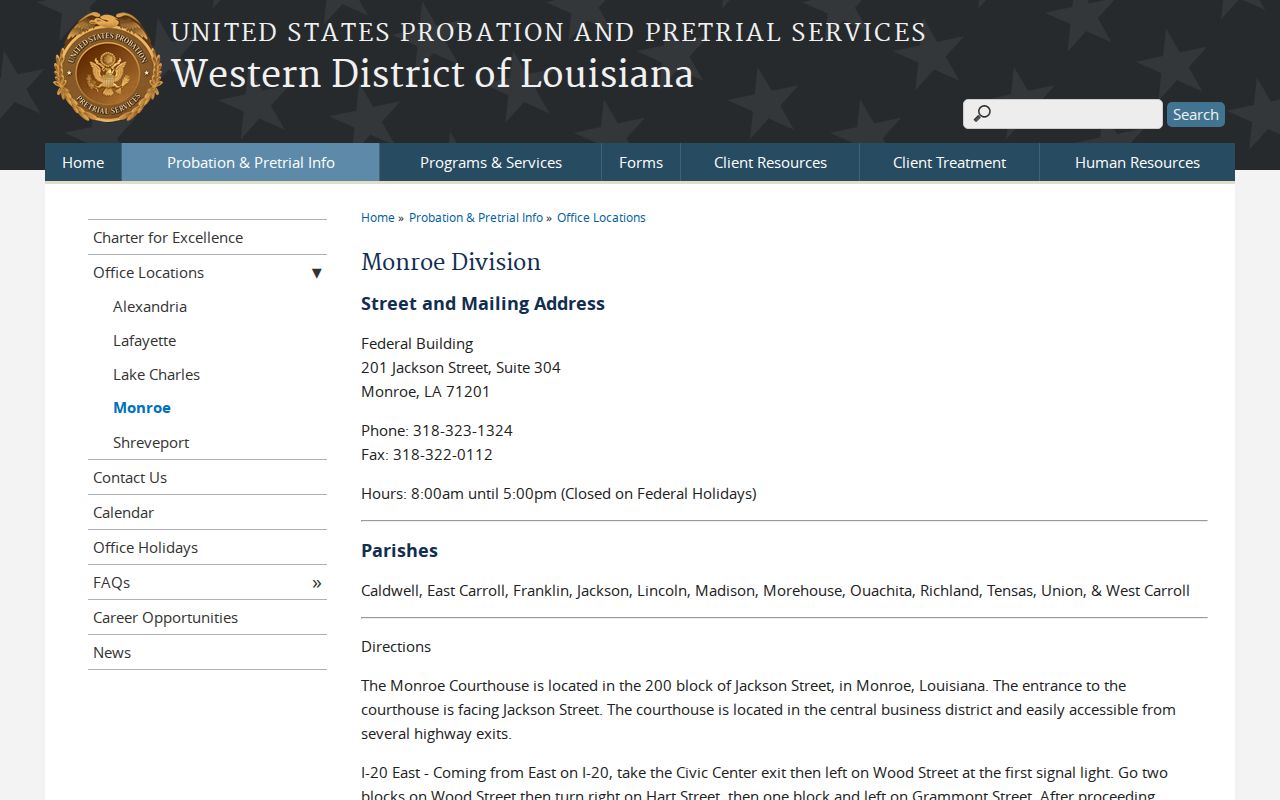
The state appeal track is one thing. A federal case is another. The official Western District of Louisiana Monroe Division is a separate federal forum entirely. A case that started in Tensas Parish is different. It does not land on that docket just because of where the event happened.
Notices naming the United States or the Western District point to that different system. The federal division's official record information spells out how that division handles its filings and clerk services. That path differs from any St. Joseph court docket.
St. Joseph docket questions usually land in one of two places. For municipal matters, the town court handles the case; Sixth JDC records cover parish-level issues.
St. Joseph Zoom Court Confirmation
Sixth JDC allows both in-person and Zoom hearings. Remote attendance, though, is not a public docket-search function. The court's FAQ tells a participant to choose Attend Court Online at the appointed time, using the password the court supplied, the participant's full name, and the waiting room. Why does court-confirmed access matter? The statewide eClerks index may list record metadata without showing a live hearing date, so a St. Joseph Zoom participant should confirm the current division, time, and password through the court's documented process.
The FAQ adds practical warnings. A weak connection can disrupt a remote hearing, and breakout rooms are private and unrecorded. Those details do not fold town minutes or a payment page into the St. Joseph court docket. They are simply reasons to reconfirm the particular Sixth JDC setting after any change or reset.
Public Access to St. Joseph Court Records
Public access follows custody. The Tensas Parish Clerk is the legal custodian for clerk-held Sixth JDC records. A St. Joseph Mayor's Court record must come from the town's municipal route. A justice-court record must come from that particular justice. Louisiana R.S. 44:31 lets adults inspect, copy, or reproduce public records unless an exemption applies. Even so, copies, certification, image printing, postage, or retrieval can carry charges where inspection itself is free.
Key Rules:
La. R.S. 44:31 recognizes the right to inspect, copy, or reproduce public records unless law provides an exception.
La. R.S. 44:32 addresses public-record custodians, access during office hours, fees, and response duties.
La. C.C.P. art. 251 places clerk-held court records in the clerk’s custody and permits examination and copies subject to law.
Two limits shape what a search can show. Children's Code art. 412 protects juvenile records, and C.Cr.P. art. 973 makes expunged records confidential. A missing St. Joseph search result can also reflect a different custodian, an older microfilm file, or a category left out of the chosen portal.
St. Joseph Court Record Limits
State and federal records sit in separate systems. LCRAA and eClerks LA eFiling build a statewide electronic framework. The Tensas clerk offers no direct public eFiling endpoint. Federal works the other way. The official Western District of Louisiana court site links straight to PACER and CM/ECF for federal filings and records, and PACER is the federal docket and document system of record. None of that replaces town or parish records here. A federal case carries its own court and its own case number, and it will not surface just because a docket search begins in St. Joseph.
The Western District of Louisiana court page shows the PACER and CM/ECF access points that mark off this limited federal branch from Tensas Parish court records.
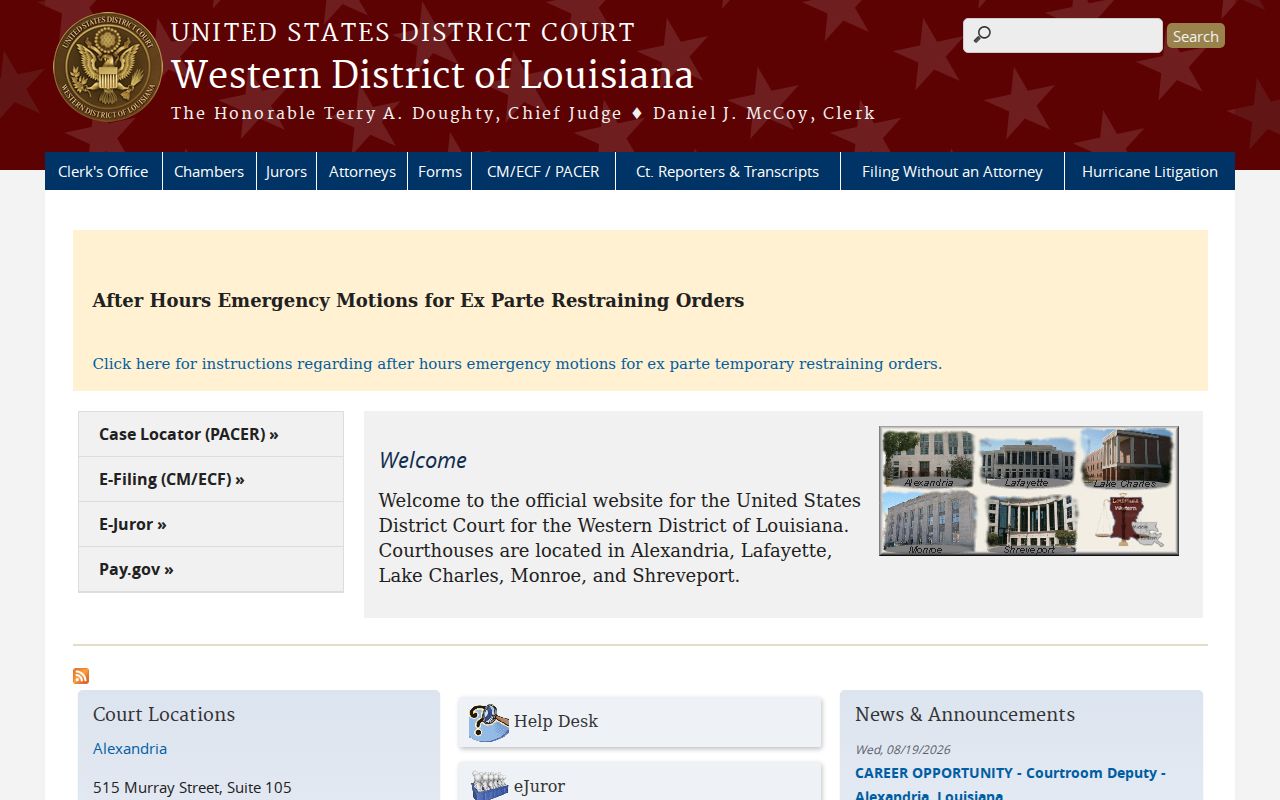
Most people should stay on the local track. The St. Joseph town, ward, clerk, or Sixth JDC route handles parish court records unless the paperwork actually names a federal court. Fees differ too. The official PACER pricing information shows why an official federal docket carries its own fee structure. Those rates set no Tensas Parish Clerk copy fee. They set no St. Joseph Mayor’s Court charge.
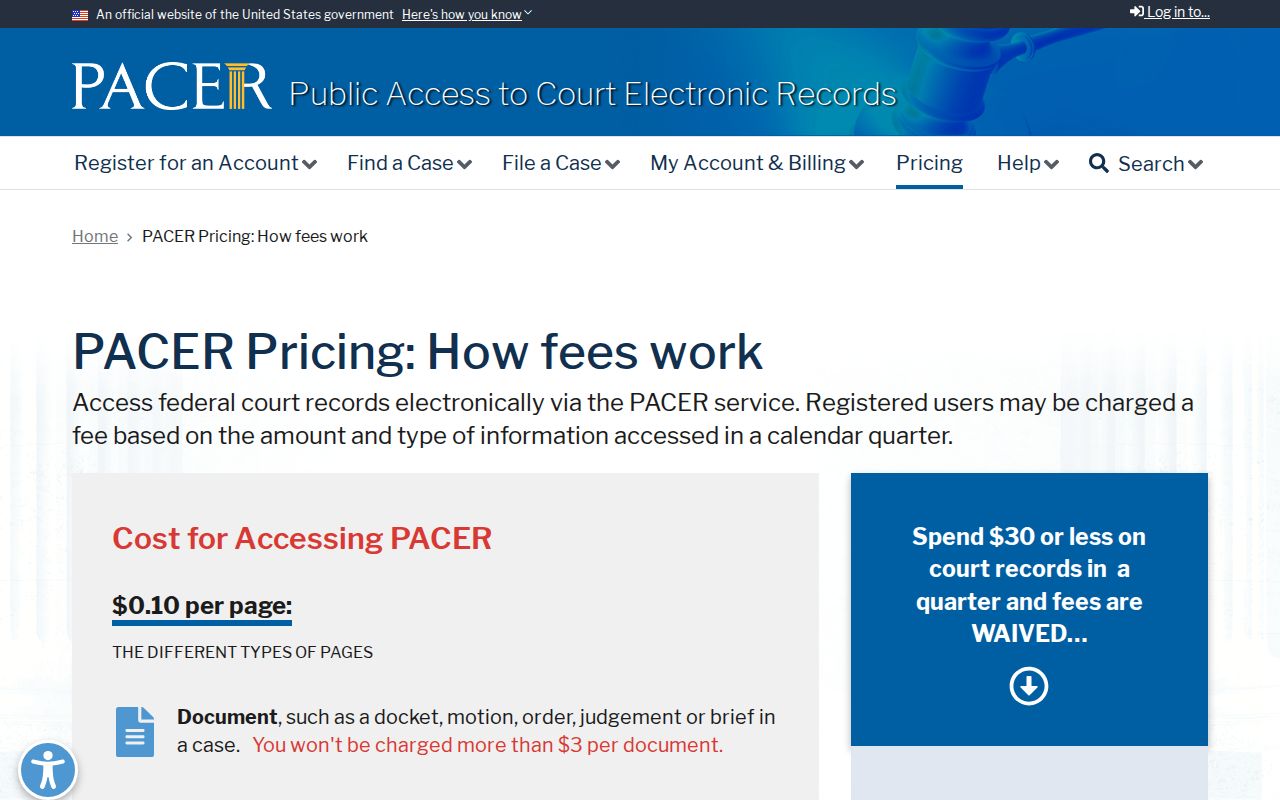
The fee schedule for St. Joseph district court records belongs to the clerk. Confirm the current cost and the copy type you need, since a federal fee rule does not apply here.